
Greece

Ferry operators & routes from Greece
Popular routes:
All regions:
- Cyclades Islands
- Athens
- Crete
- Saronic Sea
- Adriatic Sea
- North Aegean Sea
- Dodecanese Islands
- Eastern Aegean Sea
Important information
Best time to travel
The main travel season for Greece is the summer months from June to August. During this time, temperatures are warm and many tourists visit the country. If you prefer something quieter, you could also consider the shoulder season before or after summer (spring or autumn), to avoid crowds and enjoy milder temperatures.
Currency
The official currency in Greece is the euro (EUR). It is advisable to carry some cash, especially if you visit more remote places, but credit cards are accepted in most tourist areas.
Culinary delights
Greek cuisine is famous for its variety and freshness. Try local specialities such as moussaka, souvlaki, gyros, fasolada (bean soup) and Greek salad. The olive oil, feta cheese and sweet treats such as baklava are also delicious.
Weather conditions
The climate in Greece varies by region. Generally, it is hot and dry in summer, especially in coastal areas. In the mountains it can be cooler. In winter, there is snow mainly in mountain regions, while coastal areas have milder temperatures.


Among all peoples, the Greeks have dreamed the dream of life most beautifully.
Ancient heritage, fascinating culture and enchanting landscapes. A journey through Greece is also guaranteed to be a journey through history, from the ancient wonders of Athens to the picturesque islands of the Aegean.
Let the culinary delights and Mediterranean freshness seduce you, and immerse yourself in the depths of the crystal-clear waters of the Mediterranean.
Here you will find insights into the most worthwhile places in Greece as well as important information on entry and culture.
- Location: Far southeast of Europe
- Area: 132,049 km²
- Population: Around 10.7 million people
- Capital: Athens
- Official language: Greek
- Currency: Euro
- Culture: Ancient philosophy, art, architecture and the legacy of the Olympic Games
- Cuisine: Mediterranean freshness, diverse flavours, gyros, moussaka
- Activities: Exploring ancient ruins and picturesque beaches
Sights
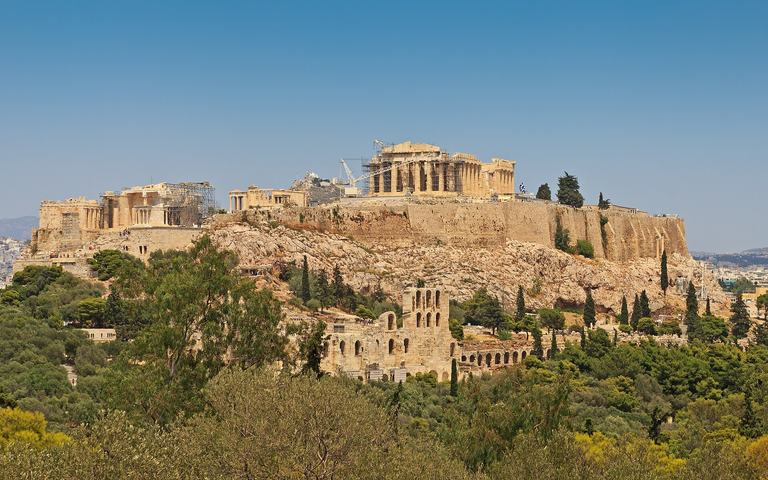
Photo: A.Savin (CC BY-SA 3.0)
The Acropolis of Athens is undoubtedly one of the most fascinating sights in the world and a symbol of ancient Greek civilisation. This impressive archaeological site rises majestically on a rock in the heart of Athens and offers a breathtaking view of the city.
Built in the 5th century BC, the Acropolis served as a fortress, temple and symbol of power. The Parthenon, the best-known building on the Acropolis, is a temple dedicated to the goddess Athena. With its impressive columns and refined architecture, it represents the golden age of Greek art and philosophy.
The Acropolis also houses other remarkable structures, including the Temple of Athena Nike, the Erechtheion and the Propylaea. The artful sculptures and reliefs that adorn the buildings tell stories from Greek mythology and give insight into the cultural and religious significance of the Acropolis.
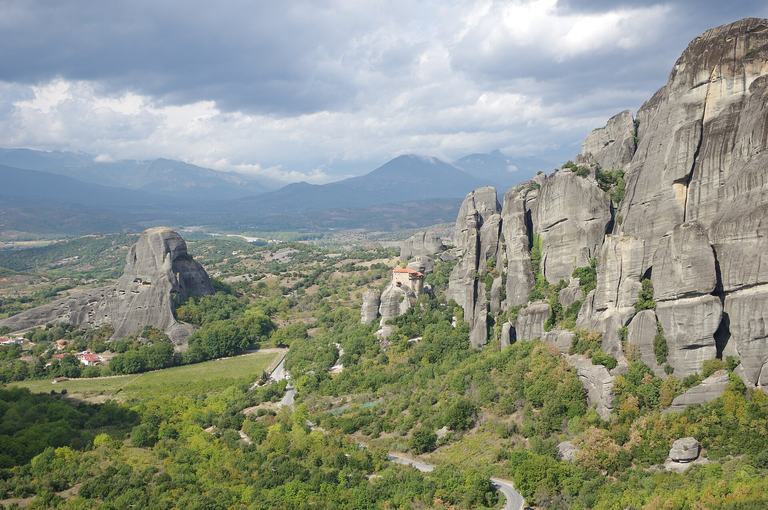
Photo: Berthold Werner (CC BY-SA 3.0)
The Meteora monasteries are a unique and breathtaking sight in Greece, perched on impressive rock formations in the Thessaly region. The name "Meteora" roughly means "suspended in the air", and these monasteries indeed rise majestically above the Kalambaka plain.
Between the 14th and 16th centuries, a total of 24 monasteries were built on the high sandstone rocks, of which six are still in operation today. The monks chose these inaccessible sites to protect themselves from conquerors and invaders. The monasteries are not only a testament to spiritual devotion, but also an impressive example of the architecture and building art of their time.
The monasteries of Meteora offer not only spiritual insights but also breathtaking views of the surrounding landscape. The rocks, rising up to 400 meters high, create a surreal backdrop for the monasteries. Visitors can reach the monasteries via stairs and narrow paths carved into the rock.
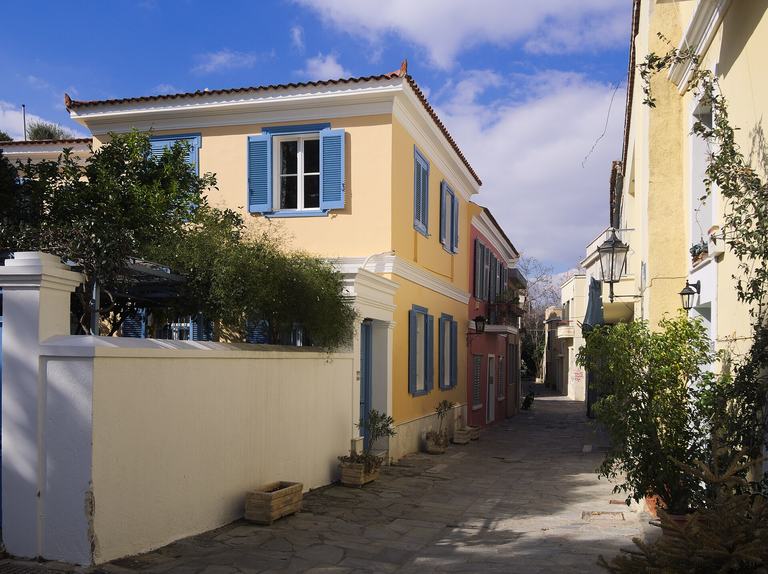
Photo: C messier (CC BY-SA 4.0)
Plaka, also known as the "Old Town" of Athens, is a charming district at the foot of the Acropolis and one of the most lively and picturesque areas in the Greek capital. With its narrow lanes, traditional buildings and cosy tavernas, Plaka attracts visitors who want to experience a mix of history, culture and local flair.
The architecture of Plaka is shaped by neoclassical houses, colourful facades and cobbled streets. The area keeps the charm of a traditional Athenian neighbourhood while also offering a lively atmosphere. The scent of flowers and the sound of street musicians add to the welcoming ambience.
Plaka is rich in history and is home to ancient ruins as well as Byzantine churches. One of the most notable sights is the Lysicrates Monument, an ancient monument from the 4th century BC that bears witness to Athens' rich cultural heritage.
The tavernas and cafés in Plaka serve authentic Greek cuisine and are perfect places to enjoy local specialities.
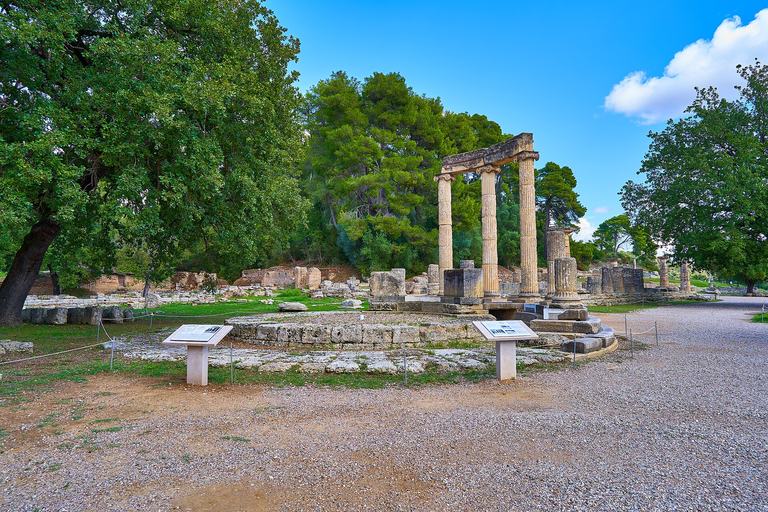
Photo: George E. Koronaios (CC BY-SA 4.0)
Olympia, the birthplace of the Olympic Games, is a historically and culturally important site in Greece. Located in the west of the Peloponnese peninsula, this ancient site attracts visitors from all over the world who want to experience the roots of the Olympic tradition.
The history of Olympia goes back to the 8th century BC, when the first Olympic Games took place here. The Games were not only a sporting event but also an occasion for the ancient Greeks to make peace and celebrate their cultural identity. The impressive architecture of Olympia includes ancient temples, altars, stadiums and gymnasiums, which blend harmoniously into the surrounding landscape.
The Sanctuary of Zeus in Olympia housed the imposing statue of Zeus, one of the Seven Wonders of the Ancient World. The Temple of Hera, the Pelopion and the Gymnasion are further impressive structures that underline the significance of this site.
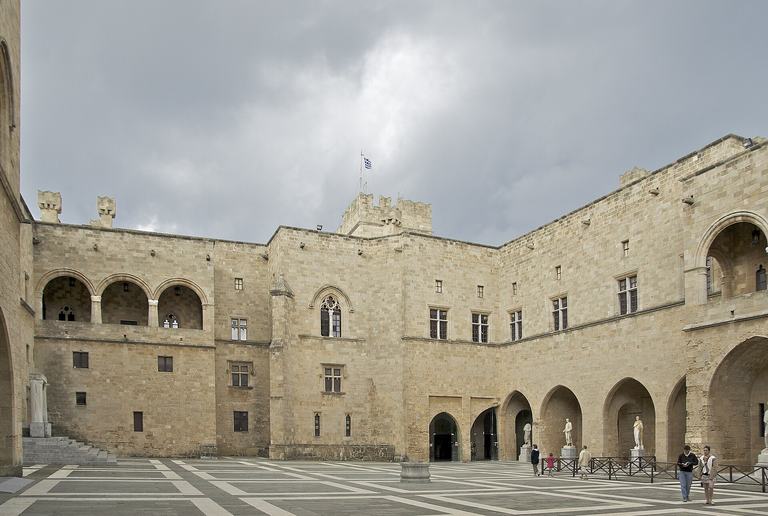
The Grand Master's Palace on the island of Rhodes is an impressive historical landmark that preserves the charm of the island's medieval past. It is located in the old town of Rhodes and reflects the rich history and cultural diversity of the region.
The Grand Master's Palace was built in the 14th century by the Knights of the Order of St John, who then ruled the island. The fortress served as the residence of the Grand Master and as the headquarters of the Order. The architecture of the palace combines Gothic, Byzantine and Venetian elements, resulting in a fascinating architectural ensemble.
During Ottoman rule, the palace was severely damaged and later rebuilt in the 20th century by Italian occupiers. Today, the Grand Master's Palace houses the Archaeological Museum of Rhodes, which presents an impressive collection of artefacts from different eras.
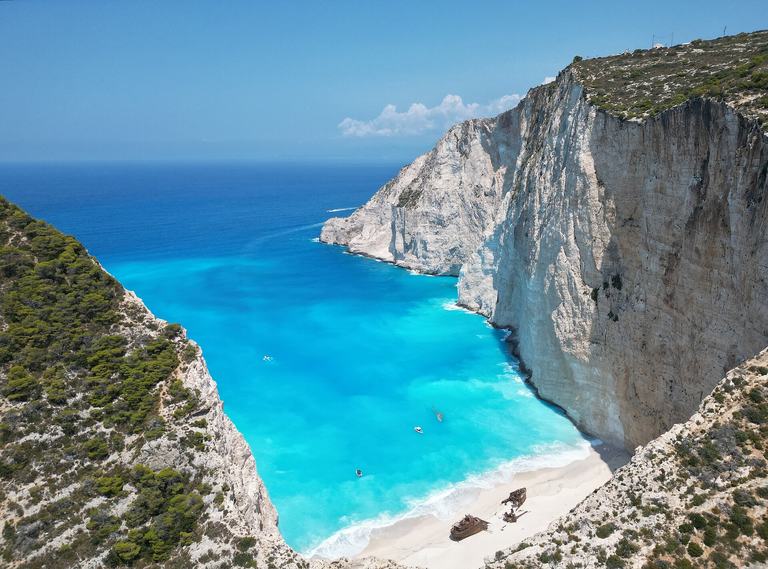
Photo: Wilnel José Verdú Guerrero (CC BY-SA 4.0)
Navagio Bay, also known as "Shipwreck Bay" or "Smugglers Cove", is one of the most impressive and iconic coastal landscapes in Greece. This breathtaking bay lies on the small island of Zakynthos and is famous for its fine white sandy beach, turquoise water and the abandoned shipwreck that lies dramatically on the shore.
The striking feature of Navagio Bay is undoubtedly the stranded shipwreck, often called the "Panagiotis". The wreck dates from the early 1980s and is surrounded by the surrounding cliffs and the deep blue waters of the Ionian Sea. This scenery has made the bay one of the most photographed places in Greece.
Access to Navagio Bay is limited, which preserves its seclusion and beauty. Visitors often reach the bay by boat from nearby coastal towns. The trip offers not only a spectacular view of the bay but also of the steep cliffs that surround it.
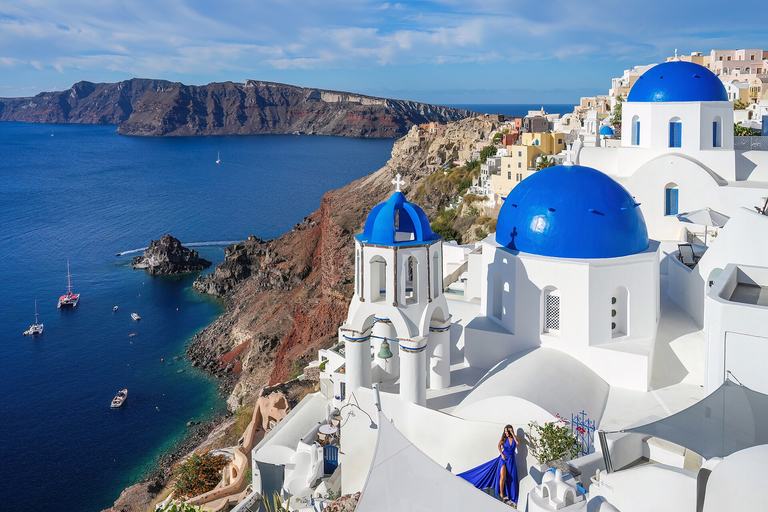
Photo: Giles Laurent (CC BY-SA 4.0)
Santorini, one of the best-known and most picturesque islands in Greece, is a true jewel of the Aegean. The unique geological formation, charming villages with white houses and blue domes, and breathtaking sunsets make Santorini one of the most sought-after destinations in the Mediterranean.
The characteristic architecture of Santorini is shaped by the traditional Cycladic houses that stretch along the cliffs. The white buildings with blue domes give the villages a distinctive look that stands out against the deep blue backdrop of the Aegean Sea.
Oia, a picturesque village in the north of the island, is particularly known for its breathtaking sunsets. The narrow lanes, boutiques and cosy cafés create a romantic atmosphere that is valued by visitors from all over the world.
The Caldera, the remnant of a volcanic eruption, is another distinctive feature of Santorini.
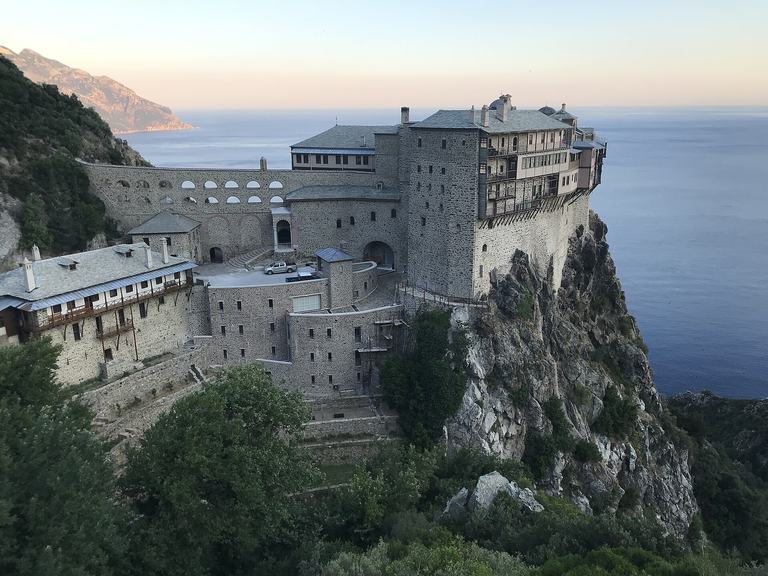
Photo: Sofomi (CC BY-SA 4.0)
The Monastic Republic of Mount Athos, also known as the Holy Mountain, is an autonomous monastic region on the Athos peninsula in Greece. This unique place is a centre of the Orthodox monastic tradition and is home to an impressive collection of monasteries that spread picturesquely across the coastal slopes and mountain peaks.
For over 1,000 years, Athos has been a spiritual centre for Orthodox Christianity. The region is closed to women, and access is permitted only to men with special permits. This helps preserve the monastic atmosphere and contemplation in this unique setting.
In total, Mount Athos is home to around 20 Byzantine monasteries, many of which were built over the centuries. Each monastery has its own history, architecture and works of art, including valuable icons, manuscripts and religious artefacts. The monasteries of Athos are known for their spiritual devotion, their Orthodox liturgy and their preservation of the monastic tradition.


Cultural facts
Ancient Heritage
Greece is famous for its rich ancient heritage, which shaped Western civilisation. To see sites such as the Acropolis in Athens or ancient Olympia, people from all over the world travel to this unique country.
Philosophy and Thinkers
Some of the most important thinkers in history come from Greece. The philosophies of Socrates, Plato and Aristotle, among others, have had a lasting influence on intellectual heritage.
Mythology
Greek mythology ranges from fascinating stories about gods to heroes and mythical creatures. The Iliad and the Odyssey are masterpieces among these stories.
Olympic Games
The Olympic Games originated in ancient Greece. Today they are an important part of the modern Olympic movement. They first took place in Olympia in 776 BC.
Mediterranean Cuisine
Greek cuisine is known for its wide variety of fresh ingredients. Olive oil, fish, vegetables and spices play an important role. Traditional classics such as moussaka, souvlaki and tzatziki are popular worldwide.
Classic Literature
Greece is also rich in literature and tradition. This ranges from the epic works of the author Homer to modern writers such as Nikos Kazantzakis, author of "Zorba the Greek".
Fun facts
Land of Islands & Mountains
Greece is one of the most island-rich countries in Europe – over 3,000 islands belong to Hellas, of which only around 110 are inhabited. The islands of Kos, Santorini, Crete and Rhodes are probably among the most popular islands.
Greece is best known for its many beautiful islands, but more than two thirds of the country is mountainous! Mount Olympus (according to mythology the seat of the gods) is the highest mountain in Greece at 2,918 metres.
Name Day Instead of Birthday
In Greece, the birthday is not really the big occasion for a party – instead, the name day is celebrated. Why? Around 97% of Greeks belong to the Greek Orthodox religion.
Most Greek names go back to Christian saints, whose death days are celebrated by Greeks as feast days. At the same time, on that day everyone who bears the name of the saint is celebrated.
Sunny Greece
Greece is indeed one of the sunniest countries in Europe!
Athens has an average of about 348 sunny days per year, and the island of Crete around 300!
Seasonal conditions
Summer
Very hot temperatures
Summer in Greece is marked by warm to hot weather. In most regions, temperatures can climb above 30 degrees Celsius, including in July and August.
The milder season arrives late in Greece. So hot days can still occur in September and even October.
Beach and swimming holidays
Greece in summer is a popular destination for beach and swimming holidaymakers. The Aegean Islands, the Ionian Islands and the mainland offer a wealth of sunny coastlines, with numerous bays, picturesque beaches and crystal-clear water.
Festivals and events
Summer is the season of numerous festivals, cultural events and local celebrations. Across the country, there are many music festivals, concerts, theatre performances and traditional festivities, which offer deep insights into Greek culture.
Tourist season
Since summer is the most beautiful time in Greece for most people, this is also reflected in visitor numbers. At this time of year, tourism is at its peak, as Greece, with its historic cities and picturesque coasts, is a popular destination for people from all over the world.
Winter
City trips
If you would like to see the popular sights and museums without large crowds of tourists, consider a trip in winter. At this time, the towns are fuller of locals, and it is possible to experience Greek culture more authentically.
Island hopping
In the quieter winter, you can also easily visit the many picturesque islands, which are independent of the season. Greece has numerous islands to offer. For example, you can admire the old town of Corfu or picturesque coastal towns and mountain villages on Crete.
Hiking
The larger islands have magnificent hiking trails that link great destinations. Andros in the Cyclades is a particular paradise, as is Zagorohoria with the dramatic Vikos Gorge. The mild climate at this time of year allows you to enjoy these trails to the full.
Winter festivals & winter sports
In Thessaloniki, the renowned film festival takes place in November, and various festivities give the winter season a very special glow. At Christmas, the waterfronts of the ports are decorated with countless lights that sparkle on the crystal-clear water.
Skiing is also an option in the northern areas, which are somewhat higher up.
Ancient cities
No season is as well suited to visiting Greece's impressive ancient sites as winter. Unlike in summer, many of them are almost deserted.